

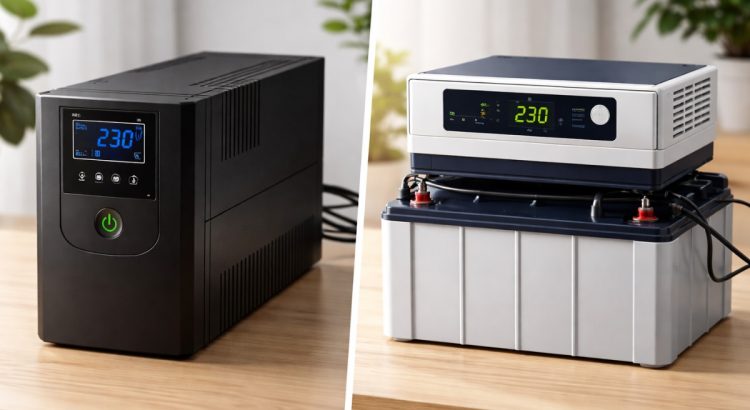
India loses billions of rupees every year due to power outages. As per industry reports, unexpected power cuts cost Indian households and businesses enormous productivity, comfort, and money too.
In past, the answer to this problem was the same everywhere: a bulky lead-acid inverter, tucked away in a corner; it required frequent refilling, smoked, and charged very slowly. Fortunately, that scenario has changed. Today, lithium ion inverters are entering Indian homes and across the country, and the evolution is not only about technology. It is also about a fundamentally different experience of what a power backup system should feel like.
Lighter, faster, and even smarter, the lithium ion inverter is meeting expectations by giving efficient power backup, longer battery life, and low maintenance compared to traditional inverter systems. But what exactly is it and how does it actually differ from the traditional inverter system most people still taken into use? Let this guide help you understand each and every thing in detail.
What is a Lithium Ion Inverter System?
Work as a backup power system, a lithium ion inverter stores electricity and supplies it when there is no electricity. The primary job of the inverter remains unchanged – still converts the direct current stored in the battery into alternating current.
As a result, appliances like lights, fans, and television will be running. What makes a lithium-ion inverter different is the battery it uses. The power system relies on lithium battery technology instead of traditional lead-acid batteries.
How is the Traditional Inverter System?
To differentiate between these power sources, it’s also important to know what a traditional inverter is. As said in the previous section, a traditional inverter uses a lead-acid battery.
Lead plates sit inside a container, which is filled with sulphuric acid. When electricity passes through, a chemical reaction stores the energy. When there is no electricity, that reaction reverses and releases the stored charge.
Significant Differences Between a Lithium Inverter and a Traditional Inverter
- Lifespan of Battery
This is one of the foremost and most common differences between the two systems.
Usually, Lithium batteries have a lifespan of 2,000 to 3,000 charge cycles, compared to 500 to 600 cycles of lead-acid batteries.
A lithium battery inverter may last up to 10-12 years without replacement. On the flip side, a lead-acid inverter may need replacement every two to three years. That is a huge difference in total cost of ownership.
Even though the upfront price of a lithium ion inverter is higher than a traditional inverter system, you are not buying a replacement battery every few years.
- Charging Speed
Traditional lead-acid inverters have a slow charging speed. If you have a prolonged power outage and the grid restores power, you may have to wait hours for your backup to be restored.
Talking about lithium battery charging speed, it can be fully charged in as little as two to four hours. On the other hand, a tubular lead-acid inverter may take up to 12-15 hours to be fully charged. In areas where there are frequent or back-to-back power cuts, this aspect matters a lot.
- Energy Efficiency
Compared to the 60% to 65% efficiency of lead-acid batteries, lithium-ion batteries are up to 95% energy efficient. By owning a Lithium Ion Inverter, you can get more usable power per charge.
Traditional inverters waste a significant amount of the energy they store. Lithium-ion systems lose very little in conversion. For somebody paying close attention to electricity bills, that gap adds up quickly.
- Maintenance Requirements
Traditional inverters with tubular or flat-plate batteries need to be checked every other day. You have to check the water level, top up with distilled water, clear out the terminals, and look for acid leaks. For many, doing so is a tedious task. In hot regions, the water evaporators even more faster and the battery needs attention more often.
With a built-in lithium-ion battery, there will be no need to monitor water levels or perform regular water top-ups. After all, it is designed to be completely maintenance-free. All you need to install it and forget about it. This is a significant quality-of-life improvement.
- Size and Weight
A traditional inverter setup requires a separate, heavy battery unit, which weighs anywhere from 40 to 70 kg. These batteries take up dedicated floor space and are also difficult to move.
On the opposite side, lithium ion batteries are more compact and lighter compared to heavy and bulky lead-acid batteries. Due to not being bulky, they have become a perfect option for modern homes and compact spaces.
Many lithium ion inverters are now wall-mounted. They look more like a modern appliance than a backup power unit.
- Safety and Impact on the Environment
There are various serious safety concerns associated with lead-acid batteries, i.e, the release of hydrogen gas (which is flammable) during charging, the risk of burns and damage to surfaces from acid spills, and the disposal of old lead-acid batteries being a hazard to the environment.
Lead-acid batteries comprise harmful chemicals and release toxic fumes sometimes, which makes their disposal difficult. On the other side, there are no hazardous chemicals in lithium-ion batteries, making them eco-friendly and safe.
- Modern Technology Integration
Modern inverters designed for lithium batteries often come equipped with smart technology, allowing better monitoring while controlling energy use.
Coming to the traditional inverters, they offer almost no visibility into how your battery is working. Lithium-ion systems often have app connectivity, display panels, and alerts, allowing you to easily stay informed about charge levels, load status, and battery health.
Is a lithium-ion inverter worth its high price?
The initial cost of a lithium ion inverter is comparatively higher, which is a fair point. But when comparing, always consider the total cost over time, not only the price tag.
Although lithium batteries are slightly more expensive than traditional lead-acid batteries, the longer lifespan and greater efficiency make them an economical option for long-term use.
When you consider reduced maintenance costs, fewer battery replacements, lower electricity bills due to improved efficiency, and also the convenience of faster charging, the result often favours the lithium option over a five to 10-year period.
Conclusion | Lithium Ion Inverter Vs Traditional Inverter System
The lithium ion inverter is not only an upgrade to the traditional inverter; it also represents a completely different approach to power backup. Fast charging, longer life, no maintenance, better efficiency, and smooth operation – everything makes it a compelling choice for modern homes and offices alike. Understanding the difference between the two power sources helps you make an informed decision that is suitable for your home, your budget, as well as for your lifestyle.


